How does a hand rehabilitation exoskeleton improve hand coordination?
Hey there! I'm a supplier of Hand Rehabilitation Exoskeletons, and today I'm super stoked to chat about how these amazing devices can boost hand coordination. So, let's dive right in!
First off, what exactly is hand coordination? Well, it's the ability of our hands to work together smoothly and efficiently to perform various tasks. Whether it's writing, picking up a cup, or tying shoelaces, good hand coordination is crucial for our daily lives. But for folks who've suffered from injuries like strokes, nerve damage, or are dealing with conditions like diabetes and paralysis, this basic skill can become a real challenge.
Our hand rehabilitation exoskeletons are designed to be a game - changer in these situations. Picture this: a sleek and adjustable device that fits snugly around the hand, kind of like a high - tech glove. But it's way more than just a glove; it's a powerful rehabilitation tool.
One of the key ways our exoskeletons improve hand coordination is through resistive training. The exoskeleton provides controlled resistance as you move your fingers and hand. When you try to close your hand, for example, the device pushes back gently. This resistance forces your muscles to work harder, which is like a workout for your hand. Just like how lifting weights at the gym makes your arm muscles stronger, this resistive training strengthens the muscles in your hand. As these muscles get stronger, they become more capable of working in sync, which directly enhances hand coordination.
Another cool feature is the feedback system. Our exoskeletons are equipped with sensors that can detect the movement and position of each finger. These sensors send real - time data to a connected device, like a tablet or a computer. The system then analyzes this data and provides instant feedback to the user. If you're trying to perform a specific movement, say pinching your thumb and index finger together, and you're not quite getting it right, the system will let you know. It might show you a visual representation of how your hand should move or give you a gentle vibration to guide you. This immediate feedback helps you make adjustments on the fly, allowing you to learn and improve your hand coordination much faster.
Now, let's talk about the different types of hand rehabilitation exoskeletons we offer. We have the Smart Glove Rehabilitation. This one is great for general hand rehabilitation. It's lightweight and comfortable to wear, so you can use it for extended periods without feeling too restricted. It's also very adaptable, with adjustable resistance levels. Whether you're just starting your rehabilitation journey or you're in the advanced stages, the Smart Glove can be customized to meet your needs.
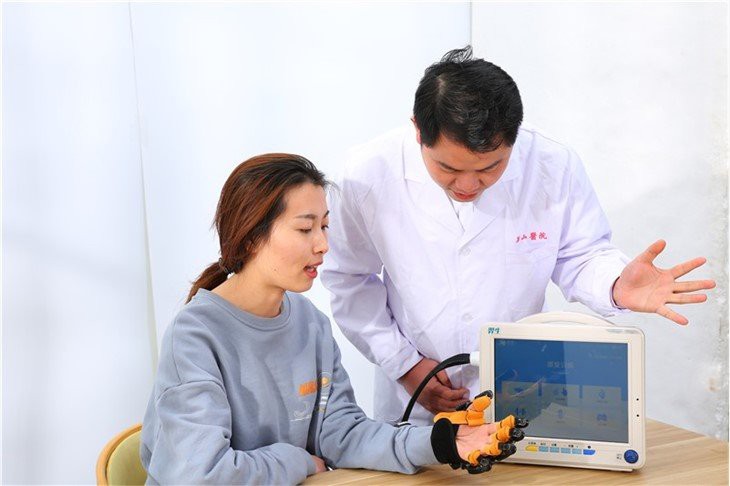
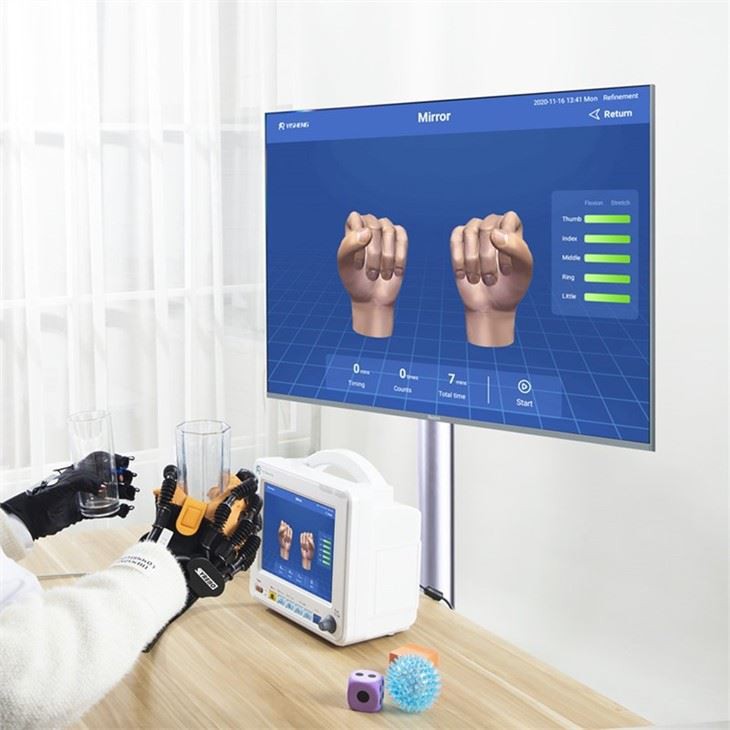
For those dealing with diabetes - related hand issues, we have the Hand Therapy Glove For Diabetes. Diabetes can cause nerve damage in the hands, leading to poor hand coordination. This specialized glove is designed to target the specific problems associated with diabetic neuropathy. It has gentle massaging features that improve blood circulation in the hands, which is often compromised in diabetic patients. By enhancing blood flow, it helps nourish the nerves and muscles, gradually improving hand function and coordination.
And then there's the Hand Recovery Exoskeleton For Paralyzed. For individuals who've lost hand movement due to paralysis, this device is a ray of hope. It can be programmed to perform a series of pre - determined movements. The exoskeleton essentially moves the user's hand for them at first, helping to stimulate the nerve pathways and "wake up" the muscles. As the patient progresses, they can start to take more control, and the exoskeleton provides support only when needed. Over time, this process can lead to significant improvements in hand coordination and even the restoration of some hand function.
But how do we know if these exoskeletons are actually working? Well, we rely on a combination of patient self - reports and objective data. Patients often report feeling more in control of their hands after using the exoskeletons. They can perform tasks that were previously impossible, like holding a fork or buttoning a shirt. On the other hand, the data from the sensors in the exoskeletons also shows real improvements in movement accuracy and range of motion. These are clear indicators that hand coordination is getting better.
In addition to helping individual patients, our hand rehabilitation exoskeletons also have big benefits for the healthcare system. They can reduce the need for long - term, in - person therapy sessions. Patients can use the devices at home, under the guidance of their healthcare providers. This not only saves time and money for the patients but also allows therapists to focus on more complex cases.
If you're a healthcare provider looking for effective hand rehabilitation solutions or an individual seeking to improve your hand coordination, I invite you to consider our Hand Rehabilitation Exoskeletons. We're committed to providing high - quality products that make a real difference in people's lives. Reach out to us for a product demonstration, and let's start a conversation about how we can help you or your patients on the road to recovery.
References
- Experts in the field of hand rehabilitation, Personal communication.
- Studies on the effectiveness of resistive training in hand rehabilitation, Journal of Physical Therapy Research.
- Research on the role of feedback systems in motor learning, Journal of Neuroscience.